
Florida’s climate and lifestyle make pools highly desirable for recreation, relaxation, and increasing property value. Building a custom home in Florida presents an excellent opportunity to incorporate a swimming pool into your initial design. However, integrating this feature during the homebuilding process requires thoughtful planning and coordination. Here are the most important factors to consider.
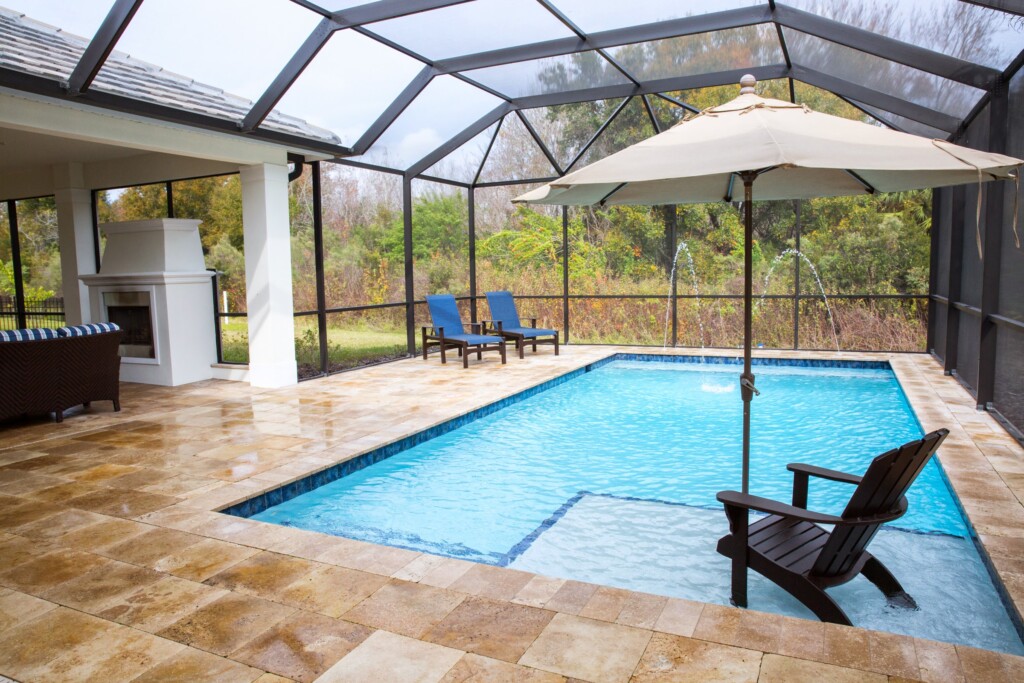
Location, Orientation, and Layout
Several factors determine where your pool can be built. Your custom homebuilder can help you determine optimal placement, which includes consideration of:
Sun Exposure and Wind: You want a sun-drenched relaxation area, but shade and breeze play a role in maintaining overall comfort. Ideally, the pool should be positioned in a location that maximizes sunlight during the day, particularly in the cooler months. Consider prevailing winds and whether you’ll need windbreaks or screening.
Home and Yard Integration: Plan the location in tandem with your home’s layout to optimize views, flow, and access. Think about how the pool connects with indoor living spaces, patios, outdoor kitchens, or lanais. Elevation and drainage also impact placement.
Setbacks and Lot Restrictions: Local zoning laws and HOA guidelines will affect pool setbacks, property lines, easements, and coverage ratios. Some Florida counties have strict guidelines that will influence how close your pool can be to structures or fences.
Soil Conditions and Water Table
The location of your lot will determine the feasibility and structure of your pool. Considerations will include:
Soil Testing: Florida’s soil can range from sandy to clay-heavy, and underground rock may require special excavation techniques. A geotechnical survey can reveal what lies beneath your lot and help the builder plan for drainage and stability.
High Water Table Concerns: Florida’s high-water table, especially in coastal or low-lying areas, can complicate construction. A high water table increases the risk of pool “floating” or hydrostatic pressure damage. Builders may need to install sump pumps, hydrostatic relief valves, or modify the pool depth accordingly.
Pool Design and Functionality
There are endless ways to install a pool in your backyard. Here are some of the design factors to think about.
Type and Shape: You’ll need to decide whether you want a concrete (gunite), fiberglass, or vinyl-lined pool. Concrete is the most common for custom homes due to its flexibility in shape and durability. The shape should complement your home’s architecture and intended use—lap swimming, entertaining, or family recreation.
Features and Upgrades: Luxury homebuilders often consider built-in features like spas, sun shelves, fountains, LED lighting, and automation. Planning early allows you to integrate plumbing, wiring, and decking seamlessly into the overall build. Don’t forget heaters—while Florida is warm, a heated pool extends usability throughout the year.
Safety Requirements: Florida law requires residential pools to have safety features such as alarms, fences, or safety covers. Homeowners will need to integrate these into aesthetic design while ensuring code compliance.
Budgeting and Timing
The design and features you choose will affect the ultimate budget of your new home project.
Cost Efficiency: Installing a pool during home construction is usually more cost-effective than adding one later. Shared site access, grading, and permitting can reduce labor and overhead.
Timeline Coordination: Contractors and home builders will need to coordinate for ideal timelines. Misalignment in schedules can lead to delays, especially when it comes to pouring concrete, utility connections, and final landscaping.
Permitting and Pool Regulations
Building Permits: Florida requires separate permits for pool construction. Your custom home builder should handle this step for you, but it never hurts to verify.
Environmental Impact: In some areas, especially near wetlands or coastal zones, you may need additional environmental assessments. These may affect location, size, or require special engineering.
Hurricane and Storm Preparedness: Pools in Florida must be built to withstand storms. Ensure drainage plans account for heavy rain, and that surrounding structures (screens, patios) meet wind-load requirements.
Landscaping and Outdoor Living Integration
Your pool is part of an overall aesthetic plan for your home. Don’t forget to consider how the pool fits into the comprehensive landscaping design.
Hardscaping and Drainage: Design patios, walkways, and deck surfaces that complement both the pool and home. Plan drainage carefully to prevent flooding or runoff into the pool.
Privacy and Plant Selection: You can use landscaping to provide privacy and shade while avoiding debris-heavy trees that clog filters. Native Florida plants are often best due to their drought resistance and low maintenance needs.
Design a Pool, Home and Lifestyle with Bruce Williams
Installing a pool during the construction of a custom Florida home allows owners to create a seamless indoor-outdoor lifestyle. If you are planning a move to the Gulf Coast and want to build a custom home, Bruce Williams has the long-standing reputation and experience you need.
Florida’s climate and lifestyle make pools highly desirable for recreation, relaxation, and increasing property value. Building a custom home in Florida presents an excellent opportunity to incorporate a swimming pool into your initial design. However, integrating this feature during the homebuilding process requires thoughtful planning and coordination. Here are the most important factors to consider.
Location, Orientation, and Layout
Several factors determine where your pool can be built. Your custom homebuilder can help you determine optimal placement, which includes consideration of:
Sun Exposure and Wind: You want a sun-drenched relaxation area, but shade and breeze play a role in maintaining overall comfort. Ideally, the pool should be positioned in a location that maximizes sunlight during the day, particularly in the cooler months. Consider prevailing winds and whether you’ll need windbreaks or screening.
Home and Yard Integration: Plan the location in tandem with your home’s layout to optimize views, flow, and access. Think about how the pool connects with indoor living spaces, patios, outdoor kitchens, or lanais. Elevation and drainage also impact placement.
Setbacks and Lot Restrictions: Local zoning laws and HOA guidelines will affect pool setbacks, property lines, easements, and coverage ratios. Some Florida counties have strict guidelines that will influence how close your pool can be to structures or fences.
Soil Conditions and Water Table
The location of your lot will determine the feasibility and structure of your pool. Considerations will include:
Soil Testing: Florida’s soil can range from sandy to clay-heavy, and underground rock may require special excavation techniques. A geotechnical survey can reveal what lies beneath your lot and help the builder plan for drainage and stability.
High Water Table Concerns: Florida’s high-water table, especially in coastal or low-lying areas, can complicate construction. A high water table increases the risk of pool “floating” or hydrostatic pressure damage. Builders may need to install sump pumps, hydrostatic relief valves, or modify the pool depth accordingly.
Pool Design and Functionality
There are endless ways to install a pool in your backyard. Here are some of the design factors to think about.
Type and Shape: You’ll need to decide whether you want a concrete (gunite), fiberglass, or vinyl-lined pool. Concrete is the most common for custom homes due to its flexibility in shape and durability. The shape should complement your home’s architecture and intended use—lap swimming, entertaining, or family recreation.
Features and Upgrades: Luxury homebuilders often consider built-in features like spas, sun shelves, fountains, LED lighting, and automation. Planning early allows you to integrate plumbing, wiring, and decking seamlessly into the overall build. Don’t forget heaters—while Florida is warm, a heated pool extends usability throughout the year.
Safety Requirements: Florida law requires residential pools to have safety features such as alarms, fences, or safety covers. Homeowners will need to integrate these into aesthetic design while ensuring code compliance.
Budgeting and Timing
The design and features you choose will affect the ultimate budget of your new home project.
Cost Efficiency: Installing a pool during home construction is usually more cost-effective than adding one later. Shared site access, grading, and permitting can reduce labor and overhead.
Timeline Coordination: Contractors and home builders will need to coordinate for ideal timelines. Misalignment in schedules can lead to delays, especially when it comes to pouring concrete, utility connections, and final landscaping.
Permitting and Pool Regulations
Building Permits: Florida requires separate permits for pool construction. Your custom home builder should handle this step for you, but it never hurts to verify.
Environmental Impact: In some areas, especially near wetlands or coastal zones, you may need additional environmental assessments. These may affect location, size, or require special engineering.
Hurricane and Storm Preparedness: Pools in Florida must be built to withstand storms. Ensure drainage plans account for heavy rain, and that surrounding structures (screens, patios) meet wind-load requirements.
Landscaping and Outdoor Living Integration
Your pool is part of an overall aesthetic plan for your home. Don’t forget to consider how the pool fits into the comprehensive landscaping design.
Hardscaping and Drainage: Design patios, walkways, and deck surfaces that complement both the pool and home. Plan drainage carefully to prevent flooding or runoff into the pool.
Privacy and Plant Selection: You can use landscaping to provide privacy and shade while avoiding debris-heavy trees that clog filters. Native Florida plants are often best due to their drought resistance and low maintenance needs.
Design a Pool, Home and Lifestyle with Bruce Williams
Installing a pool during the construction of a custom Florida home allows owners to create a seamless indoor-outdoor lifestyle. If you are planning a move to the Gulf Coast and want to build a custom home, Bruce Williams has the long-standing reputation and experience you need.