Building a custom home in Manatee County – or anywhere along Florida’s Gulf Coast – requires designing with water in mind. With seasonal heavy rainfall and severe weather patterns common in the region, flood-resistant construction is an essential component of modern Florida home design. When planned correctly, elements such as proper drainage and elevation can protect your home and its long-term value.
Effective Drainage is Vital to Flood-Resistant Design
During recent hurricanes, much of the area flooding was caused by drainage systems that became overwhelmed.
Every lot behaves differently when it rains, depending on soil composition, slope, and surrounding development. In Manatee County, flat terrain and sandy soils can create drainage challenges if not addressed in the design phase. A well-designed drainage plan manages water before it becomes a problem, directing runoff away from the home and toward appropriate collection or absorption areas.
Custom builders often integrate grading strategies that gently move water away from the foundation. Swales, underground drainage systems, and properly placed catch basins help control heavy rainfall during Florida’s wet season. Roof runoff is also carefully managed through gutters, downspouts, and drainage extensions that prevent water from pooling near the home. When drainage is treated as part of the overall design (not an afterthought), it reduces erosion and safeguards the home’s structure.
Elevation Considerations to Strategically Prepare for Floods
Florida is notoriously low-lying, making elevation another critical factor in flood-resistant design. In many areas of Manatee County and surrounding coastal communities, FEMA flood zones and local regulations dictate minimum finished floor elevations. Raising the home above base flood elevation helps reduce the risk of flood damage during major storm events and can also lower flood insurance costs.
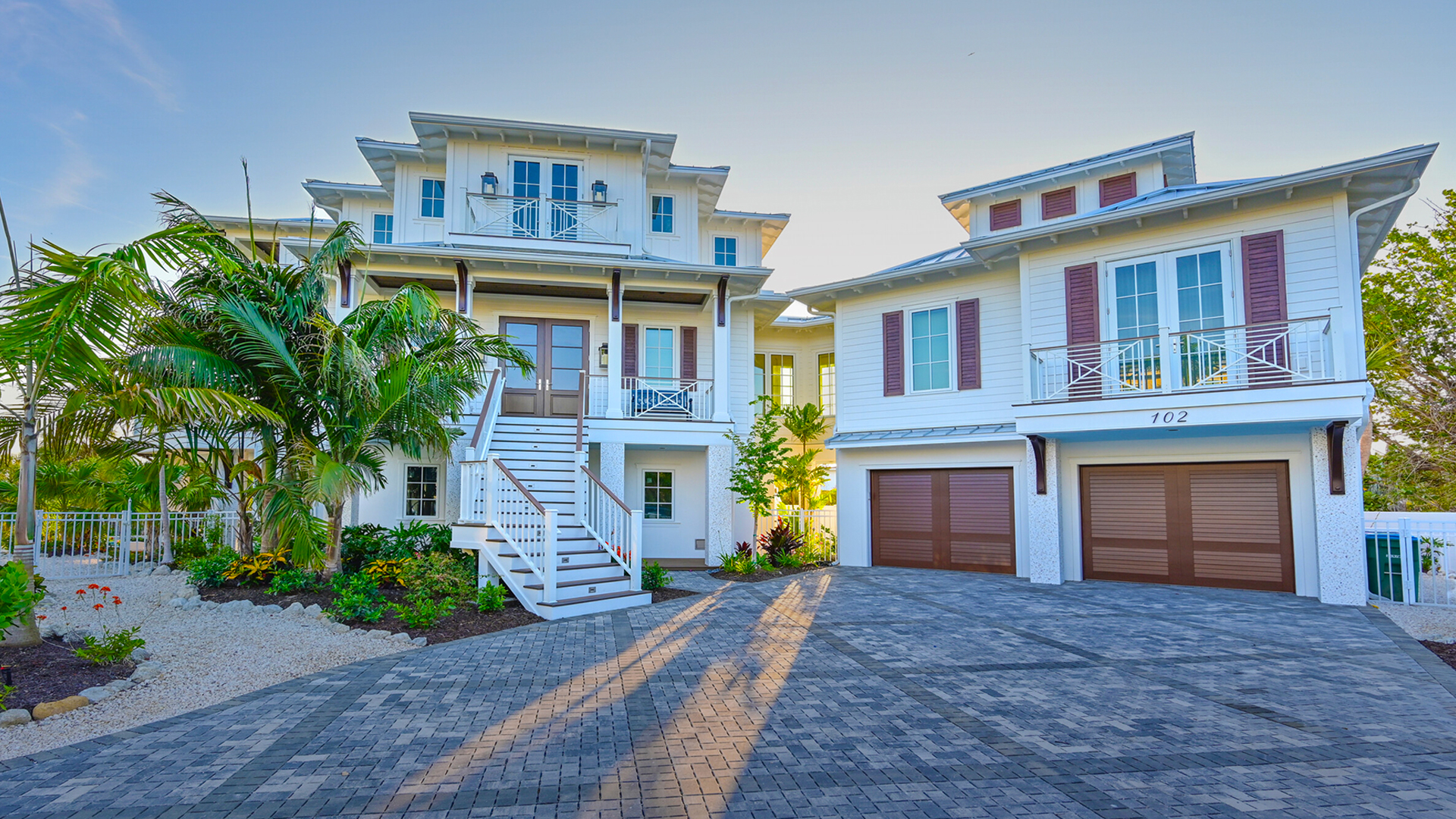
Elevation doesn’t have to compromise design. In fact, many custom homes use raised foundations to their advantage. Elevated homes often feature areas under the main home that offer storage, parking, and enhanced airflow – and are made aesthetically pleasing with landscaping or inviting staircases. These design choices add both protection and architectural character.
Beyond compliance, elevation improves durability. Keeping living spaces higher above grade reduces exposure to standing water, moisture intrusion, and long-term wear on building materials. For homeowners planning to stay in their homes for decades, this approach supports both safety and longevity.
Additional Flood-Resistant Design Considerations
- Flood-resistant design extends into material selection and construction methods. In flood-prone regions, builders often use concrete block construction, reinforced foundations, and moisture-resistant materials to minimize damage if water intrusion occurs. Flooring options, wall assemblies, and insulation can all be chosen with water resistance in mind.
- Windows and doors also play a role. Impact-rated windows and elevated thresholds help protect against wind-driven rain and storm surge. Strategic placement of mechanical systems—such as HVAC units and electrical components—keeps critical systems above potential flood levels, reducing downtime and repair costs after severe weather.
- Landscaping is another often-overlooked part of flood-resistant design. Native and Florida-friendly plants are well adapted to local rainfall patterns and help stabilize soil. Permeable surfaces, such as pavers or crushed stone, allow water to absorb into the ground rather than run off uncontrollably.
Trust Bruce Williams with Your Coastal Home
For custom home builders in Manatee County, smart drainage and flood-resistant design help ensure homes are prepared for Florida’s unique climate – today and into the future. They also provide homeowners with peace of mind, knowing their investment is protected against common environmental risks.
When incorporated early in the design process, these elements blend seamlessly into the home’s architecture and site plan. The result is a custom home that is resilient and well-suited to life on Florida’s Gulf Coast. Bruce Williams designs homes that don’t just withstand the environment, but that live comfortably within it.
Building a custom home in Manatee County – or anywhere along Florida’s Gulf Coast – requires designing with water in mind. With seasonal heavy rainfall and severe weather patterns common in the region, flood-resistant construction is an essential component of modern Florida home design. When planned correctly, elements such as proper drainage and elevation can protect your home and its long-term value.
Effective Drainage is Vital to Flood-Resistant Design
During recent hurricanes, much of the area flooding was caused by drainage systems that became overwhelmed.
Every lot behaves differently when it rains, depending on soil composition, slope, and surrounding development. In Manatee County, flat terrain and sandy soils can create drainage challenges if not addressed in the design phase. A well-designed drainage plan manages water before it becomes a problem, directing runoff away from the home and toward appropriate collection or absorption areas.
Custom builders often integrate grading strategies that gently move water away from the foundation. Swales, underground drainage systems, and properly placed catch basins help control heavy rainfall during Florida’s wet season. Roof runoff is also carefully managed through gutters, downspouts, and drainage extensions that prevent water from pooling near the home. When drainage is treated as part of the overall design (not an afterthought), it reduces erosion and safeguards the home’s structure.
Elevation Considerations to Strategically Prepare for Floods
Florida is notoriously low-lying, making elevation another critical factor in flood-resistant design. In many areas of Manatee County and surrounding coastal communities, FEMA flood zones and local regulations dictate minimum finished floor elevations. Raising the home above base flood elevation helps reduce the risk of flood damage during major storm events and can also lower flood insurance costs.
Elevation doesn’t have to compromise design. In fact, many custom homes use raised foundations to their advantage. Elevated homes often feature areas under the main home that offer storage, parking, and enhanced airflow – and are made aesthetically pleasing with landscaping or inviting staircases. These design choices add both protection and architectural character.
Beyond compliance, elevation improves durability. Keeping living spaces higher above grade reduces exposure to standing water, moisture intrusion, and long-term wear on building materials. For homeowners planning to stay in their homes for decades, this approach supports both safety and longevity.
Additional Flood-Resistant Design Considerations
- Flood-resistant design extends into material selection and construction methods. In flood-prone regions, builders often use concrete block construction, reinforced foundations, and moisture-resistant materials to minimize damage if water intrusion occurs. Flooring options, wall assemblies, and insulation can all be chosen with water resistance in mind.
- Windows and doors also play a role. Impact-rated windows and elevated thresholds help protect against wind-driven rain and storm surge. Strategic placement of mechanical systems—such as HVAC units and electrical components—keeps critical systems above potential flood levels, reducing downtime and repair costs after severe weather.
- Landscaping is another often-overlooked part of flood-resistant design. Native and Florida-friendly plants are well adapted to local rainfall patterns and help stabilize soil. Permeable surfaces, such as pavers or crushed stone, allow water to absorb into the ground rather than run off uncontrollably.
Trust Bruce Williams with Your Coastal Home
For custom home builders in Manatee County, smart drainage and flood-resistant design help ensure homes are prepared for Florida’s unique climate – today and into the future. They also provide homeowners with peace of mind, knowing their investment is protected against common environmental risks.
When incorporated early in the design process, these elements blend seamlessly into the home’s architecture and site plan. The result is a custom home that is resilient and well-suited to life on Florida’s Gulf Coast. Bruce Williams designs homes that don’t just withstand the environment, but that live comfortably within it.