
Building a new custom home in one of Sarasota’s historic neighborhoods—whether it’s Laurel Park, Burns Court, Indian Beach-Sapphire Shores, or Granada—comes with an important responsibility. These communities are treasured not just for their beautiful architecture, but for the craftsmanship and cultural heritage they preserve. When you introduce a new home into this kind of setting, it should feel like it belongs, enhancing the neighborhood’s character rather than overwhelming it.
Here are the essential features and design principles a new custom home should include to respectfully and thoughtfully integrate into Sarasota’s historic landscape.
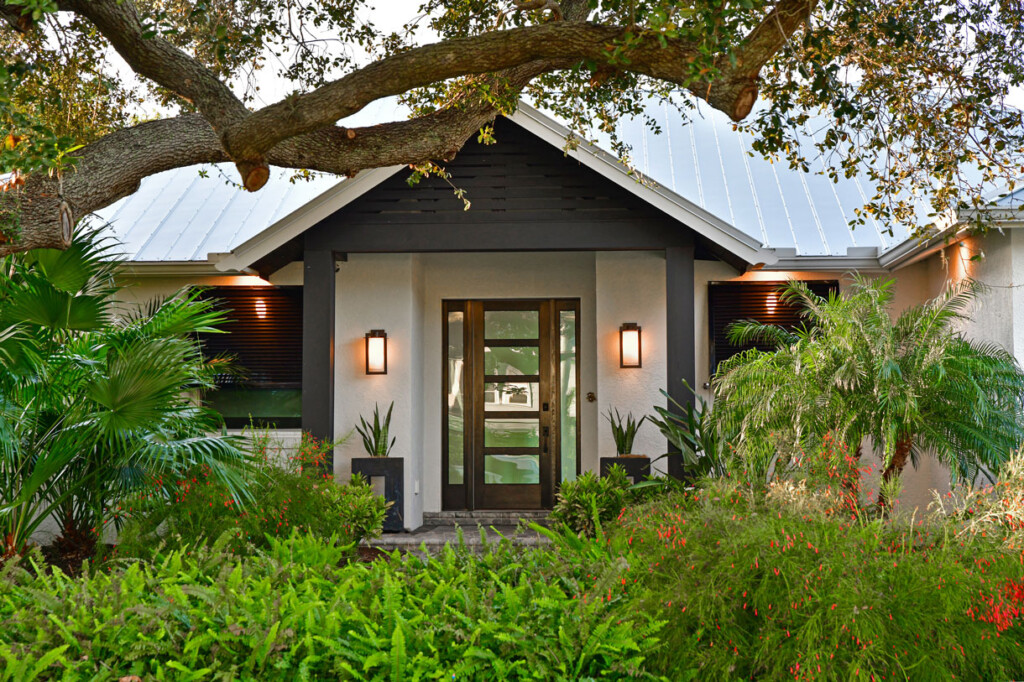
Architectural Harmony with Existing Styles: Historic Sarasota area neighborhoods feature a blend of Mediterranean Revival, Craftsman bungalows and Mid-Century Modern (including Sarasota School of Architecture). A new custom home doesn’t need to mimic these styles exactly, but it should complement their scale, proportions, rooflines, and materials. For example, new builds may want to consider low, simple roof pitches that match nearby homes, arched windows or porches inspired by Mediterranean motifs or wood detailing that nods to classic Florida bungalows. Using stylistic cues helps the house feel rooted in its surroundings while still maintaining a custom, modern identity.
Natural Materials That Age Gracefully: Historic neighborhoods have lasted for over a century because their buildings were constructed with durable, aesthetically rich materials. To maintain that sense of craftsmanship, new homes may wish to incorporate natural or high-quality materials such as stucco and masonry with hand-finished textures or brick or shellstone accents inspired by Old Florida architecture. Materials should look authentic, not faux. Classic timelessness is key to blending old and new design.
Human-Scaled Design and Street Presence: Historic homes tend to feel welcoming because they’re built at a human scale. Oversized façades or looming second-story massing can disrupt that character. A custom home should look to keep the overall height and bulk consistent with neighboring properties – and include front porches, stoops, or entry alcoves that create connection to the street. Landscaping can also soften transitions rather than create barriers. The goal is to remain in conversation with the neighborhood, not dominate it.
Thoughtful Landscaping and Native Plantings: Historic neighborhoods in Sarasota showcase lush, mature landscapes – filled with palms, oaks, and tropical shrubs. A new home should integrate native, climate-appropriate plantings that support the area’s ecological character. Consider preserving existing mature trees whenever possible and including Florida-friendly landscaping that blends with the neighborhood’s natural look. Using permeable materials for driveways to reduce runoff and mimic older design practices. The landscaping should feel like a continuation of what has grown there for generations.
Modern Functionality with Historic Sensibility: You don’t have to sacrifice comfort or technology to respect history. Many custom homes successfully combine classic forms with energy-efficient windows styled to match historic proportions, modern interior layouts hidden behind traditional exteriors and sustainability features that enhance longevity without altering the aesthetic. Think of it as quietly modern—never flashy.
Community and Preservation Engagement: Building in a historic neighborhood may require collaboration with local preservation boards or neighborhood associations. Communicating with these associations groups early on demonstrates respect – and can help ensure the final design aligns with the neighborhood’s legacy, as well as vision for its future.
A new custom home in a historic Sarasota neighborhood should feel like it belongs—not only by imitating the past, but by honoring it.
Bruce Williams Homes has been building quality homes across the Gulf Coast for over 60 years. We understand the area’s history and legacy – while also being committed to building the home you want. Call today to find out more about how we work, to view our portfolio, and to begin the process of building your new home.
Building a new custom home in one of Sarasota’s historic neighborhoods—whether it’s Laurel Park, Burns Court, Indian Beach-Sapphire Shores, or Granada—comes with an important responsibility. These communities are treasured not just for their beautiful architecture, but for the craftsmanship and cultural heritage they preserve. When you introduce a new home into this kind of setting, it should feel like it belongs, enhancing the neighborhood’s character rather than overwhelming it.
Here are the essential features and design principles a new custom home should include to respectfully and thoughtfully integrate into Sarasota’s historic landscape.
Architectural Harmony with Existing Styles: Historic Sarasota area neighborhoods feature a blend of Mediterranean Revival, Craftsman bungalows and Mid-Century Modern (including Sarasota School of Architecture). A new custom home doesn’t need to mimic these styles exactly, but it should complement their scale, proportions, rooflines, and materials. For example, new builds may want to consider low, simple roof pitches that match nearby homes, arched windows or porches inspired by Mediterranean motifs or wood detailing that nods to classic Florida bungalows. Using stylistic cues helps the house feel rooted in its surroundings while still maintaining a custom, modern identity.
Natural Materials That Age Gracefully: Historic neighborhoods have lasted for over a century because their buildings were constructed with durable, aesthetically rich materials. To maintain that sense of craftsmanship, new homes may wish to incorporate natural or high-quality materials such as stucco and masonry with hand-finished textures or brick or shellstone accents inspired by Old Florida architecture. Materials should look authentic, not faux. Classic timelessness is key to blending old and new design.
Human-Scaled Design and Street Presence: Historic homes tend to feel welcoming because they’re built at a human scale. Oversized façades or looming second-story massing can disrupt that character. A custom home should look to keep the overall height and bulk consistent with neighboring properties – and include front porches, stoops, or entry alcoves that create connection to the street. Landscaping can also soften transitions rather than create barriers. The goal is to remain in conversation with the neighborhood, not dominate it.
Thoughtful Landscaping and Native Plantings: Historic neighborhoods in Sarasota showcase lush, mature landscapes – filled with palms, oaks, and tropical shrubs. A new home should integrate native, climate-appropriate plantings that support the area’s ecological character. Consider preserving existing mature trees whenever possible and including Florida-friendly landscaping that blends with the neighborhood’s natural look. Using permeable materials for driveways to reduce runoff and mimic older design practices. The landscaping should feel like a continuation of what has grown there for generations.
Modern Functionality with Historic Sensibility: You don’t have to sacrifice comfort or technology to respect history. Many custom homes successfully combine classic forms with energy-efficient windows styled to match historic proportions, modern interior layouts hidden behind traditional exteriors and sustainability features that enhance longevity without altering the aesthetic. Think of it as quietly modern—never flashy.
Community and Preservation Engagement: Building in a historic neighborhood may require collaboration with local preservation boards or neighborhood associations. Communicating with these associations groups early on demonstrates respect – and can help ensure the final design aligns with the neighborhood’s legacy, as well as vision for its future.
A new custom home in a historic Sarasota neighborhood should feel like it belongs—not only by imitating the past, but by honoring it.
Bruce Williams Homes has been building quality homes across the Gulf Coast for over 60 years. We understand the area’s history and legacy – while also being committed to building the home you want. Call today to find out more about how we work, to view our portfolio, and to begin the process of building your new home.