
Building in the Sunshine State is an excellent decision — where you can enjoy beautiful beaches, warm weather, and relaxed indoor-outdoor living. But those perks ultimately affect your home’s design, especially when it comes to flooring. Between sandy feet, high humidity, heavy rain, and year-round sunshine, choosing the right flooring reflects practicality, comfort, and long-term durability.
So, what flooring options work best for Florida living? Let’s take a closer look at materials that balance beauty, resilience, and cool comfort.
Porcelain and Ceramic Tile: It’s no surprise that tile is one of the most popular flooring choices across Florida homes. Porcelain and ceramic tiles are incredibly durable, moisture-resistant, and easy to clean—making them ideal for handling everything from wet footprints after a pool dip to sand tracked in from a day at the beach. Tile floors stay naturally cool underfoot, a significant advantage in Florida’s hot, humid climate. Porcelain tile, in particular, is denser and less porous than ceramic, offering superior resistance to water damage and staining. Plus, modern tile design offers endless possibilities—wood-look planks, stone textures, or sleek contemporary finishes—allowing homeowners to achieve nearly any aesthetic without sacrificing performance. Best for: Main living areas, kitchens, bathrooms, and entryways.
Luxury Vinyl Plank (LVP): Luxury vinyl plank flooring combines beauty, durability, and affordability. Designed to mimic the appearance of hardwood or stone, LVP is completely waterproof, scratch-resistant, and comfortable underfoot. It’s an excellent choice for families, pet owners, or anyone looking for a low-maintenance option that still offers a high-end look. Because it resists warping and swelling, LVP holds up well in Florida’s humidity. Many homeowners also appreciate its softer feel compared to tile and its ability to reduce noise in open-concept floor plans. Best for: Bedrooms, family rooms, and homes that need both comfort and resilience.
Natural Stone: Natural stone flooring—like travertine, marble, or limestone—fits beautifully with Florida’s relaxed, coastal style. Stone’s natural coolness helps keep interiors comfortable, and its distinctive textures bring a touch of luxury to any custom home design. However, stone does require proper sealing to protect against moisture and staining, especially in areas with frequent rain or high humidity. While it can cost more, stone flooring’s beautiful durability makes it worth the cost for homeowners who want sophistication and longevity. Best for: Entryways, living rooms, and outdoor patios.
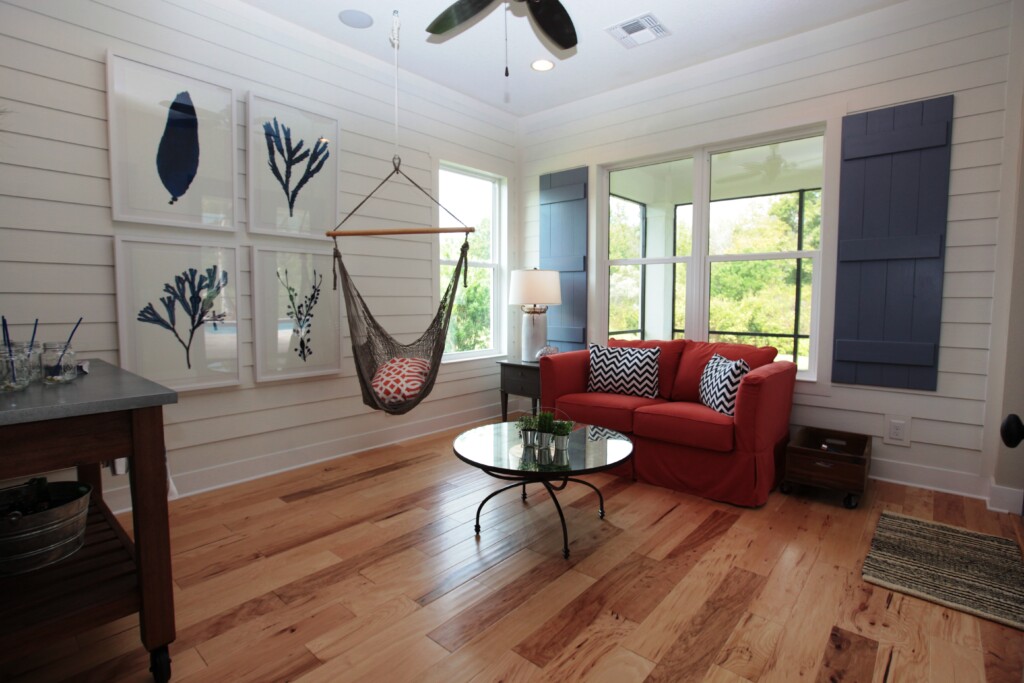
Engineered Hardwood: While traditional hardwood isn’t always ideal for Florida’s climate—since humidity can cause warping and cupping—engineered hardwood offers a beautiful alternative. Constructed with layers that improve stability, engineered wood is more resistant to moisture and temperature changes than solid wood. This option allows homeowners to enjoy the warmth of natural wood floors – without the same maintenance concerns. Choosing lighter wood tones can also help reflect sunlight and keep interiors cooler, a subtle but effective design advantage in Florida’s bright environment. Best for: Bedrooms, offices, and living areas with good climate control.
Outdoor-Friendly Options: True Florida lifestyles blur the line between inside and outside spaces. Extending durable flooring materials like porcelain tile or natural stone to lanais, pool decks, and covered patios can create a seamless flow from indoors to outdoors. Many manufacturers even offer slip-resistant finishes specifically designed for these areas—perfect for entertaining or relaxing after a swim. Best for: Lanais, sunrooms, and poolside living spaces.
Finding the Perfect Flooring Fit for Your Florida Lifestyle
The best flooring for your Florida home depends on your specific project. If you’re building near the coast, you’ll want materials that can handle salt air, humidity, and sandy feet. For inland or suburban homes, comfort and aesthetics might take priority. Ultimately, the ideal flooring combines practicality with personal style.
Working with an experienced custom home builder like Bruce Williams Homes ensures that every surface in your home, from tile to trim, makes sense in Florida’s unique environment.
Building in the Sunshine State is an excellent decision — where you can enjoy beautiful beaches, warm weather, and relaxed indoor-outdoor living. But those perks ultimately affect your home’s design, especially when it comes to flooring. Between sandy feet, high humidity, heavy rain, and year-round sunshine, choosing the right flooring reflects practicality, comfort, and long-term durability.
So, what flooring options work best for Florida living? Let’s take a closer look at materials that balance beauty, resilience, and cool comfort.
Porcelain and Ceramic Tile: It’s no surprise that tile is one of the most popular flooring choices across Florida homes. Porcelain and ceramic tiles are incredibly durable, moisture-resistant, and easy to clean—making them ideal for handling everything from wet footprints after a pool dip to sand tracked in from a day at the beach. Tile floors stay naturally cool underfoot, a significant advantage in Florida’s hot, humid climate. Porcelain tile, in particular, is denser and less porous than ceramic, offering superior resistance to water damage and staining. Plus, modern tile design offers endless possibilities—wood-look planks, stone textures, or sleek contemporary finishes—allowing homeowners to achieve nearly any aesthetic without sacrificing performance. Best for: Main living areas, kitchens, bathrooms, and entryways.
Luxury Vinyl Plank (LVP): Luxury vinyl plank flooring combines beauty, durability, and affordability. Designed to mimic the appearance of hardwood or stone, LVP is completely waterproof, scratch-resistant, and comfortable underfoot. It’s an excellent choice for families, pet owners, or anyone looking for a low-maintenance option that still offers a high-end look. Because it resists warping and swelling, LVP holds up well in Florida’s humidity. Many homeowners also appreciate its softer feel compared to tile and its ability to reduce noise in open-concept floor plans. Best for: Bedrooms, family rooms, and homes that need both comfort and resilience.
Natural Stone: Natural stone flooring—like travertine, marble, or limestone—fits beautifully with Florida’s relaxed, coastal style. Stone’s natural coolness helps keep interiors comfortable, and its distinctive textures bring a touch of luxury to any custom home design. However, stone does require proper sealing to protect against moisture and staining, especially in areas with frequent rain or high humidity. While it can cost more, stone flooring’s beautiful durability makes it worth the cost for homeowners who want sophistication and longevity. Best for: Entryways, living rooms, and outdoor patios.
Engineered Hardwood: While traditional hardwood isn’t always ideal for Florida’s climate—since humidity can cause warping and cupping—engineered hardwood offers a beautiful alternative. Constructed with layers that improve stability, engineered wood is more resistant to moisture and temperature changes than solid wood. This option allows homeowners to enjoy the warmth of natural wood floors – without the same maintenance concerns. Choosing lighter wood tones can also help reflect sunlight and keep interiors cooler, a subtle but effective design advantage in Florida’s bright environment. Best for: Bedrooms, offices, and living areas with good climate control.
Outdoor-Friendly Options: True Florida lifestyles blur the line between inside and outside spaces. Extending durable flooring materials like porcelain tile or natural stone to lanais, pool decks, and covered patios can create a seamless flow from indoors to outdoors. Many manufacturers even offer slip-resistant finishes specifically designed for these areas—perfect for entertaining or relaxing after a swim. Best for: Lanais, sunrooms, and poolside living spaces.
Finding the Perfect Flooring Fit for Your Florida Lifestyle
The best flooring for your Florida home depends on your specific project. If you’re building near the coast, you’ll want materials that can handle salt air, humidity, and sandy feet. For inland or suburban homes, comfort and aesthetics might take priority. Ultimately, the ideal flooring combines practicality with personal style.
Working with an experienced custom home builder like Bruce Williams Homes ensures that every surface in your home, from tile to trim, makes sense in Florida’s unique environment.