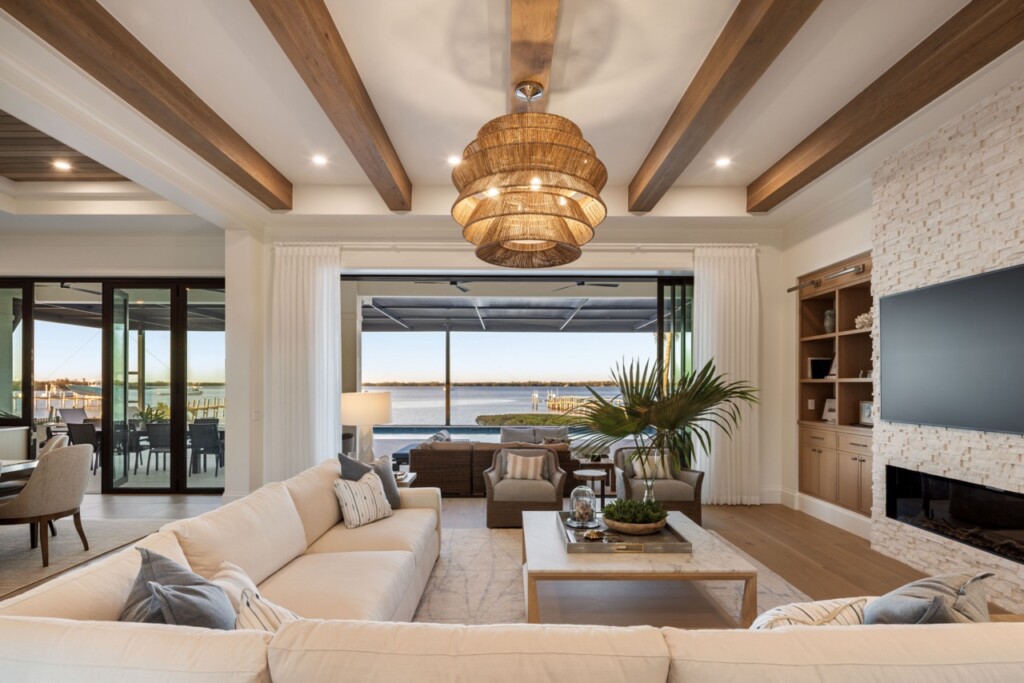
Florida’s subtropical climate delivers heat, humidity, and strong UV rays throughout the year. For homeowners building a custom home in the Sunshine State, it’s essential to incorporate design features that protect against heat and improve energy efficiency. From smart architectural choices to advanced building materials, here are nine of the best custom home features to help keep your Florida home cool and comfortable year-round.
- Reflective Roofing Materials: The roof is your home’s first line of defense against the sun. In Florida, using cool or reflective roofing materials can significantly reduce heat absorption. For instance, metal roofing with reflective coating helps reflect more sunlight than traditional dark materials – as do clay tiles or light-colored asphalt shingles. Not only do these materials keep attic spaces cooler, but they also reduce the load on your air conditioning system.
- Radiant Barriers: Radiant barriers are reflective insulation systems installed in attics to reduce heat gain. They reflect radiant heat rather than absorb it, keeping attic temperatures significantly lower. When paired with proper attic ventilation and insulation, radiant barriers can greatly enhance a home’s energy efficiency.
- High-Efficiency Windows and Treatments: Windows can be a major source of heat gain. Choose double- or triple-pane, low-emissivity (Low-E) windows that block UV and infrared light while letting in visible light. Tinted or reflective coatings reduce heat transfer, and solar shades or plantation shutters will block the strongest sunlight.
- Strategic Home Orientation and Overhangs: The orientation of your home plays a crucial role in managing heat. Positioning your home to minimize direct sun exposure on large windows—especially on the west and south sides—can reduce indoor temperatures. Roof overhangs, awnings, or covered patios can shade windows and walls, preventing solar heat gain while still allowing natural light.
- Energy-Efficient HVAC System: A high-efficiency air conditioning system (ENERGY STAR-rated HVAC systems with a high SEER rating) is vital in Florida’s climate. Zoning systems, programmable thermostats, and smart HVAC controls can optimize cooling where and when it’s needed, reducing energy waste and monthly utility bills.
- Cool Interior Finishes: The materials you choose inside your home can also affect indoor temperature. Opt for tile, stone, or concrete flooring instead of carpet or wood—these materials stay cooler underfoot and help regulate temperature. Light-colored paints, cabinetry, and furniture reflect heat rather than absorb it, keeping rooms cooler.
- Natural Ventilation and Ceiling Fans: Design your home with cross-ventilation in mind. Strategically placed windows and vents allow fresh air to flow through the home – especially useful during cooler mornings and evenings. Ceiling fans in main living spaces and bedrooms will help circulate air and reduce reliance on air conditioning.
- Smart Landscaping: Landscaping can be both functional and beautiful. Planting shade trees on the east and west sides of your home provides natural protection from the sun. Using native, drought-tolerant plants reduces the need for irrigation and keeps your yard low-maintenance. Gravel or light-colored mulch also reflects sunlight better than dark mulch or asphalt paths.
- Solar Panels: While not a direct heat deterrent, solar panels can help offset the high energy demands of cooling a Florida home. With abundant sunshine, Florida is ideal for residential solar energy. Solar panels reduce dependence on the grid and lower utility bills, making your home more sustainable and cost-effective over time.
Bruce Williams Homes Builds Resilient Florida Houses
Investing in heat-resistant materials and energy-efficient systems upfront can lead to long-term savings and increased home value. To learn more about building a home that can stand up to the heat, trust the team that has been building here for 60 years – Bruce Williams Homes. Browse our portfolio, or give us a call to set up a consultation.
Florida’s subtropical climate delivers heat, humidity, and strong UV rays throughout the year. For homeowners building a custom home in the Sunshine State, it’s essential to incorporate design features that protect against heat and improve energy efficiency. From smart architectural choices to advanced building materials, here are nine of the best custom home features to help keep your Florida home cool and comfortable year-round.
- Reflective Roofing Materials: The roof is your home’s first line of defense against the sun. In Florida, using cool or reflective roofing materials can significantly reduce heat absorption. For instance, metal roofing with reflective coating helps reflect more sunlight than traditional dark materials – as do clay tiles or light-colored asphalt shingles. Not only do these materials keep attic spaces cooler, but they also reduce the load on your air conditioning system.
- Radiant Barriers: Radiant barriers are reflective insulation systems installed in attics to reduce heat gain. They reflect radiant heat rather than absorb it, keeping attic temperatures significantly lower. When paired with proper attic ventilation and insulation, radiant barriers can greatly enhance a home’s energy efficiency.
- High-Efficiency Windows and Treatments: Windows can be a major source of heat gain. Choose double- or triple-pane, low-emissivity (Low-E) windows that block UV and infrared light while letting in visible light. Tinted or reflective coatings reduce heat transfer, and solar shades or plantation shutters will block the strongest sunlight.
- Strategic Home Orientation and Overhangs: The orientation of your home plays a crucial role in managing heat. Positioning your home to minimize direct sun exposure on large windows—especially on the west and south sides—can reduce indoor temperatures. Roof overhangs, awnings, or covered patios can shade windows and walls, preventing solar heat gain while still allowing natural light.
- Energy-Efficient HVAC System: A high-efficiency air conditioning system (ENERGY STAR-rated HVAC systems with a high SEER rating) is vital in Florida’s climate. Zoning systems, programmable thermostats, and smart HVAC controls can optimize cooling where and when it’s needed, reducing energy waste and monthly utility bills.
- Cool Interior Finishes: The materials you choose inside your home can also affect indoor temperature. Opt for tile, stone, or concrete flooring instead of carpet or wood—these materials stay cooler underfoot and help regulate temperature. Light-colored paints, cabinetry, and furniture reflect heat rather than absorb it, keeping rooms cooler.
- Natural Ventilation and Ceiling Fans: Design your home with cross-ventilation in mind. Strategically placed windows and vents allow fresh air to flow through the home – especially useful during cooler mornings and evenings. Ceiling fans in main living spaces and bedrooms will help circulate air and reduce reliance on air conditioning.
- Smart Landscaping: Landscaping can be both functional and beautiful. Planting shade trees on the east and west sides of your home provides natural protection from the sun. Using native, drought-tolerant plants reduces the need for irrigation and keeps your yard low-maintenance. Gravel or light-colored mulch also reflects sunlight better than dark mulch or asphalt paths.
- Solar Panels: While not a direct heat deterrent, solar panels can help offset the high energy demands of cooling a Florida home. With abundant sunshine, Florida is ideal for residential solar energy. Solar panels reduce dependence on the grid and lower utility bills, making your home more sustainable and cost-effective over time.
Bruce Williams Homes Builds Resilient Florida Houses
Investing in heat-resistant materials and energy-efficient systems upfront can lead to long-term savings and increased home value. To learn more about building a home that can stand up to the heat, trust the team that has been building here for 60 years – Bruce Williams Homes. Browse our portfolio, or give us a call to set up a consultation.